Inclusive Communication
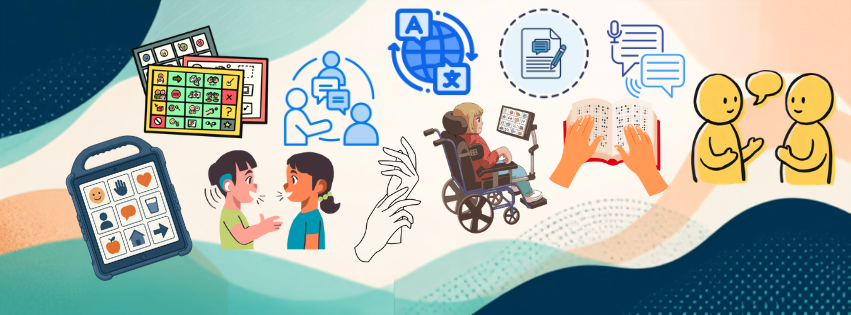
At NeuroDiverse Community CIC, we champion all forms of communication because everyone deserves to be understood, to make choices and to take part in community life. We welcome British Sign Language (BSL), symbols and picture boards, communication devices, gestures and speech. We also welcome people who use English as an additional language (EAL) and value the languages they use at home and in their communities. However you communicate, we’ll listen, give you time and work with you to find what helps you take part.
Why different forms of communication should be respected and included
At NeuroDiverse Community CIC, we welcome all forms of communication. Everyone should be able to ask for help, say no, share a joke, make a choice and have a say in decisions that affect them. When a group discussion only makes room for spoken answers, or an event invitation is shared as an image with no text alternative, people can be excluded before they’ve had a chance to take part. Inclusive communication means making it easier for people to understand what’s being shared and to respond in a way that works for them.
People often use more than one way to communicate. Someone might speak with friends, type a message in a busy room and use a picture or gesture when they need a break. What works can change with the person, the setting and the day.
| Form of communication | What it might look like in everyday life |
|---|---|
| British Sign Language (BSL) | A Deaf young person signs a question during a group activity. BSL is a language in its own right, with its own grammar. It uses hand movements, facial expressions and other visual features. (RNID) |
| Makaton and key-word signing | A session leader says “finished” while making the sign and showing a symbol. Makaton combines signs, symbols and speech to support understanding and expression. (About Makaton) |
| Pictures, photographs and symbols | A child points to a picture of headphones to ask for them, chooses an activity from two photos or checks a visual timetable to see what’s happening next. (Communication Matters) |
| Objects of reference | A familiar paintbrush can let someone know that an art activity is coming up. A person might choose between two familiar objects to show which activity they want to do. (Communication Matters) |
| Augmentative and alternative communication (AAC) | Someone uses a paper communication board or selects words or symbols on a tablet or dedicated device. A device with voice output can say a message aloud, such as “I want to join in.” People may make selections by touch, eye gaze or a switch. (Communication Matters) |
| Written communication and spelling | Someone writes a note, draws a picture, types in a group chat or selects letters on an alphabet board to spell out their own message. Fingerspelling can also be used within BSL, for example to spell a name. (Communication Matters) |
| Gestures, movement, facial expressions and sounds | A person might nod, look towards a choice, turn away, hum or make a familiar sound. These can all be part of how someone communicates without speech. A sound or movement can mean different things for different people, so take time to learn what it means for that person. (Easy Read) |
| Communication when speech is unavailable | Someone with selective mutism may speak comfortably at home and be unable to speak in a group. They might use a gesture, write or type if that feels possible. Sometimes those options can feel difficult too. Give the person time and space to take part without pressure to respond. (NHS) |
| Languages other than English | A parent who uses English as an additional language (EAL) might prefer to read event information in their home language or use an interpreter for a conversation. Ask which language and format work best for them. (The Bell Foundation) |
| Screen readers, read-aloud software and dictation | A screen reader can read a webpage aloud and help someone navigate its headings, links and buttons. Read-aloud software can help someone listen to written information, while speech-to-text software lets them dictate a reply. (W3C) |
| Braille and tactile communication | Someone might read a label in Braille or use Deafblind Manual, where letters are signed onto their hand to spell words. (Sense) |
What this means at NDC
If you show us a symbol, type a reply or use a device that speaks for you, that’s how we’ll have the conversation. We’ll give you time to finish your message, speak directly to you when you’re using an interpreter or communication partner, and check with you if we’re unsure what you mean. We’ll also consider how we share information, from clear written instructions and captions to image descriptions and visual timetables. You’re welcome to tell us what works for you in whatever way you prefer.
What we use currently
- Twinkl Symbols printed talking mats – https://www.twinkl.co.uk/resources/twinkl-symbols-communication-and-interaction-areas-of-need-send-inclusion/communication-boards-and-mats-twinkl-symbols-inclusion/aac-mats-communication-boards-and-mats-twinkl-symbols-resources-inclusion
- AAC software on a tablet – https://www.twinkl.co.uk/apps/twinkl-symbols
- SignVideo – https://signvideo.co.uk/
- Convo – https://www.convo.io/uk/home
- Google Translate – https://translate.google.co.uk/
- Two Blind Brothers – https://twoblindbrothers.com/pages/braille
- Dolphin EasyReader – https://yourdolphin.com/EasyReader
Have a suggestion for us? We’d love to hear it!
NDC Windsor Forces BSL
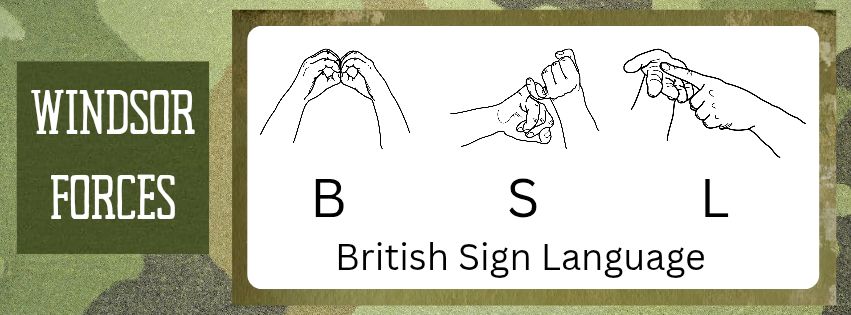
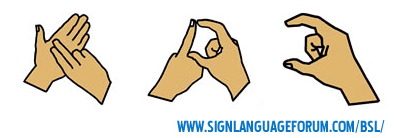
At NDC Windsor Forces, we introduce British Sign Language (BSL) through everyday activities with Armed Forces families. In Sensory Babes, parents and carers practise simple signs with their babies and toddlers. In Sensory Explorers, children learn signs through play and creative activities, such as using signs for feelings during a family craft session. We show each sign, use it in context and give children and adults time to practise together at their own pace. We do this so families can use what they learn at home, children have more ways to express themselves, and signing becomes a familiar and valued part of how we communicate in our community.