Dignity and Intimate Care Policy
Policy Approved: February 2026
Policy Review: February 2027
Policy Purpose:
NeuroDiverse Community CIC is committed to promoting the dignity, respect, and rights of all children, young people, and adults with neurodiverse conditions and/or SEND. This policy provides guidance on maintaining dignity and safeguarding during intimate care tasks, including nappy or clothing changes.
Scope:
This policy applies to all staff, volunteers, session leaders, and contractors working with NeuroDiverse Community CIC participants. It covers all activities where intimate care may be required, whether in community settings, workshops, or individual support sessions.
1. Guiding Principles
1. Respect and Dignity:
○ All individuals must be treated with respect and their privacy preserved at all times.
○ Intimate care should be conducted discreetly, ensuring the person feels safe and valued.
2. Safeguarding Alignment:
○ All intimate care activities must follow the NeuroDiverse Community CIC Safeguarding Adults and Children Policies.
○ Staff must be alert to any signs of abuse, neglect, or inappropriate conduct during intimate care.
○ Two members of staff are required to be present during ALL changes.
3. Consent and Communication:
○ Whenever possible, obtain verbal or non-verbal consent from the individual before beginning any intimate care task.
○ Explain each step clearly in language appropriate to the person’s communication needs, using visual supports if necessary.
4. Individualised Approach:
○ Intimate care plans must be tailored to each participant’s needs, preferences, and sensitivities.
○ Staff must respect personal boundaries and cultural considerations.
2. Privacy and Environment
● Intimate care should take place in a private, safe, and comfortable environment.
● Doors, curtains, or screens should be used to maintain privacy.
● Only the minimum necessary number of staff (2) should be present.
3. Staff Responsibilities
● Staff must be trained in safe intimate care practices and safeguarding procedures.
● Staff should wear appropriate protective clothing (e.g., gloves, aprons) and maintain hygiene standards.
● Any concerns or incidents must be recorded and reported immediately according to the safeguarding policy.
● Staff must never engage in actions that could be interpreted as punitive or neglectful during intimate care.
4. Participant Rights
● Individuals have the right to:
○ Choose the gender of the staff member assisting with intimate care where possible.
○ Be informed about procedures and changes before they happen.
○ Have privacy and dignity maintained at all times.
○ Refuse assistance if they feel uncomfortable, with alternative arrangements explored safely.
5. Documentation and Communication
● Individual intimate care plans should be maintained for each participant, detailing:
○ Support needs, preferred routines, and communication methods.
○ Any known sensitivities, allergies, or medical considerations.
● Records of care activities, observations, and incidents must be kept securely and in line with GDPR and safeguarding requirements.
6. Monitoring and Review
● This policy will be reviewed annually or whenever there are changes to legislation, guidance, or operational practice.
● Staff will receive regular training updates to ensure dignity and safeguarding standards are maintained.
Reference Policies:
● Safeguarding Adults and Children Policy
● Health and Safety Policy
● GDPR and Confidentiality Policy
Approval:
This policy is approved by the Board of NeuroDiverse Community CIC and is mandatory for all staff and volunteers.
NeuroDiverse Community CIC Practical Guidance: Maintaining Dignity during Nappy or Clothing Changes
Purpose:
Ensure the safety, dignity, and wellbeing of children and adults with SEND during intimate care tasks, in alignment with the NeuroDiverse Community CIC Safeguarding Policy.
1. Key Principles
● Respect and Privacy: Always explain what will happen using language or visual supports appropriate to the individual.
● Consent: Obtain verbal or non-verbal agreement before starting. Stop immediately if the person becomes distressed.
● Individualised Care: Follow each participant’s intimate care plan, respecting preferences, sensitivities, and cultural considerations.
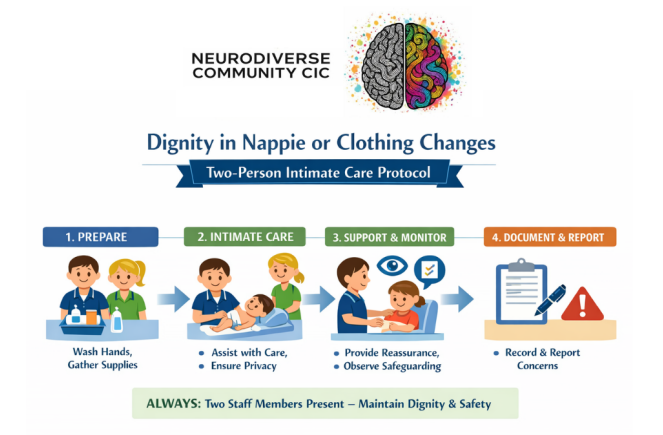
2. Two-Person Protocol
To protect both the participant and staff:
1. Presence of Two Staff Members:
○ One staff member provides direct support with the intimate care task.
○ A second staff member acts as a witness, supporting the individual, observing safety, and safeguarding.
○ Both staff members must be trained and aware of the participant’s care plan.
2. Roles and Responsibilities:
○ Primary Carer: Conducts the changing task, communicates clearly, and maintains privacy.
○ Second Staff Member: Supports communication, ensures dignity, monitors for safeguarding concerns, and documents the activity.
3. Minimising Exposure:
○ Only the participant’s necessary body parts should be exposed.
○ Use screens, curtains, or closed doors whenever possible.
3. Step-by-Step Guidance
1. Preparation:
○ Wash hands and wear protective gloves/aprons.
○ Gather all supplies beforehand.
○ Ensure environment is warm, private, and safe.
2. During Changing:
○ Explain each step before proceeding.
○ Use gentle, respectful language and slow movements.
○ Reassure the participant and encourage participation if possible.
3. After Changing:
○ Dispose of waste safely and hygienically.
○ Wash hands and encourage the participant to do so if appropriate.
○ Redress participant comfortably and safely.
4. Documentation:
○ Record the care provided, any observations, incidents, or concerns.
○ Report safeguarding concerns immediately according to policy.
Remember:
Dignity is maintained by privacy, respect, communication, and consent. Two trained staff members ensure safety and safeguarding for both participant and carers.
Reference Policies:
● Safeguarding Adults and Children Policy
● Health and Safety Policy
● GDPR & Confidentiality Policy