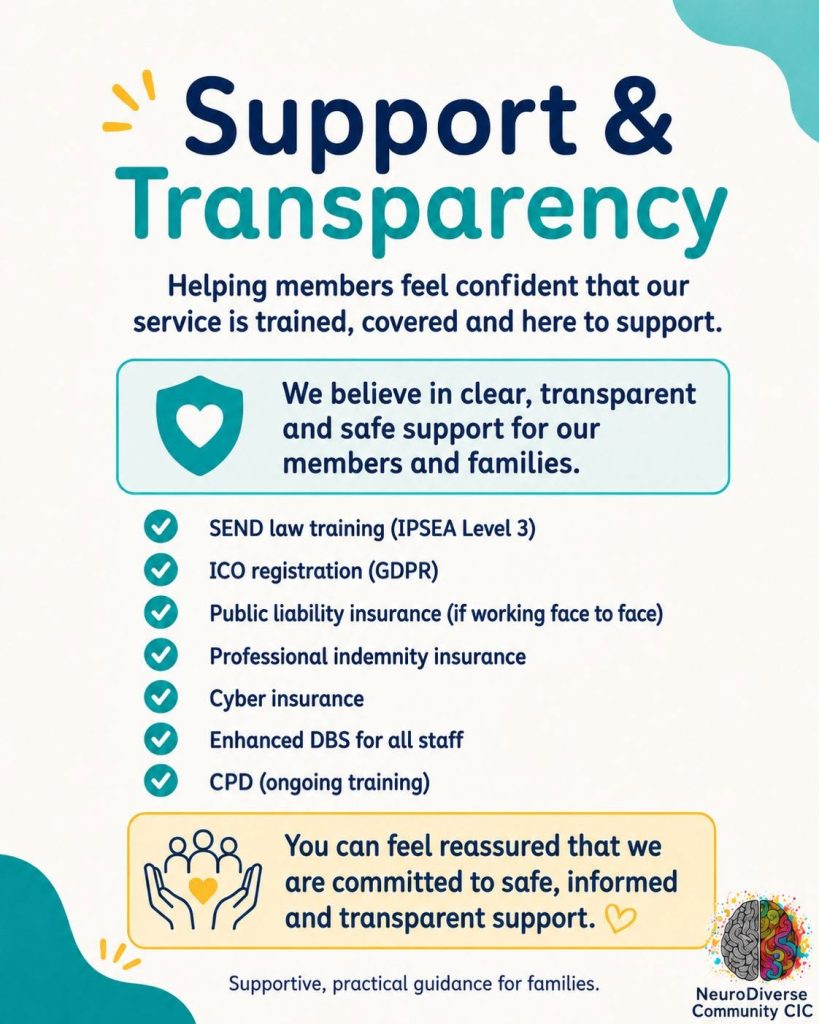


promise to families.
The NDC Difference
We meet you where you are and build support from there
Support for you and your family
We believe in supporting the individual and the whole family.
Specialised SEND Support
Our team includes IPSEA Level 3 qualified staff providing supported, informed guidance through the SEND system.
Lived Experience Guidance
Founded by parent carers who’ve been through it. We don’t just understand the system — we’ve navigated it ourselves.
How we support Parents and Carers
Practical SEND Guidance

We support parents and carers to better understand SEND processes, including EHCPs, school support, reasonable adjustments, meetings, reviews and signposting. Our aim is to help families feel more informed, confident and prepared.
Emotional Support and Understanding

As a lived experience organisation, we understand how overwhelming, isolating and exhausting parent carer life can be. We provide a safe, non-judgemental space where families feel listened to, believed and understood.
Community Connection

NDC helps parents and carers connect with others who share similar experiences. Through groups, events and informal support, we reduce isolation and help families build supportive networks within their community.
Neuro-affirming Family Support

We support families to better understand neurodivergent needs, sensory differences, communication, behaviour and emotional regulation. Our approach focuses on acceptance, individual strengths and helping families find strategies that work for them.
Signposting and Referrals to Specialist Support

We help parents and carers find the right support when they need more specialist input. This may include signposting or referring families to relevant services, organisations, professionals, community support, mental health services, disability support or Armed Forces-specific pathways.
Training and Workshops

NDC provides accessible training and workshops to help parents and carers build knowledge, confidence and practical skills. Topics may include neurodivergence, SEND processes, sensory needs, communication, behaviour as communication, emotional regulation and supporting children’s wellbeing.
Mental Health and Wellbeing Support

We recognise the emotional pressure that parents and carers often carry. NDC provides safe, understanding spaces where families can talk, feel heard, reduce isolation and access wellbeing-focused support that helps them feel less alone.
Creating Opportunities for Respite

NDC creates inclusive groups, activities and community spaces where children and young people can engage safely, giving parents and carers a chance to pause, connect with others, access support or simply take a much-needed breath.
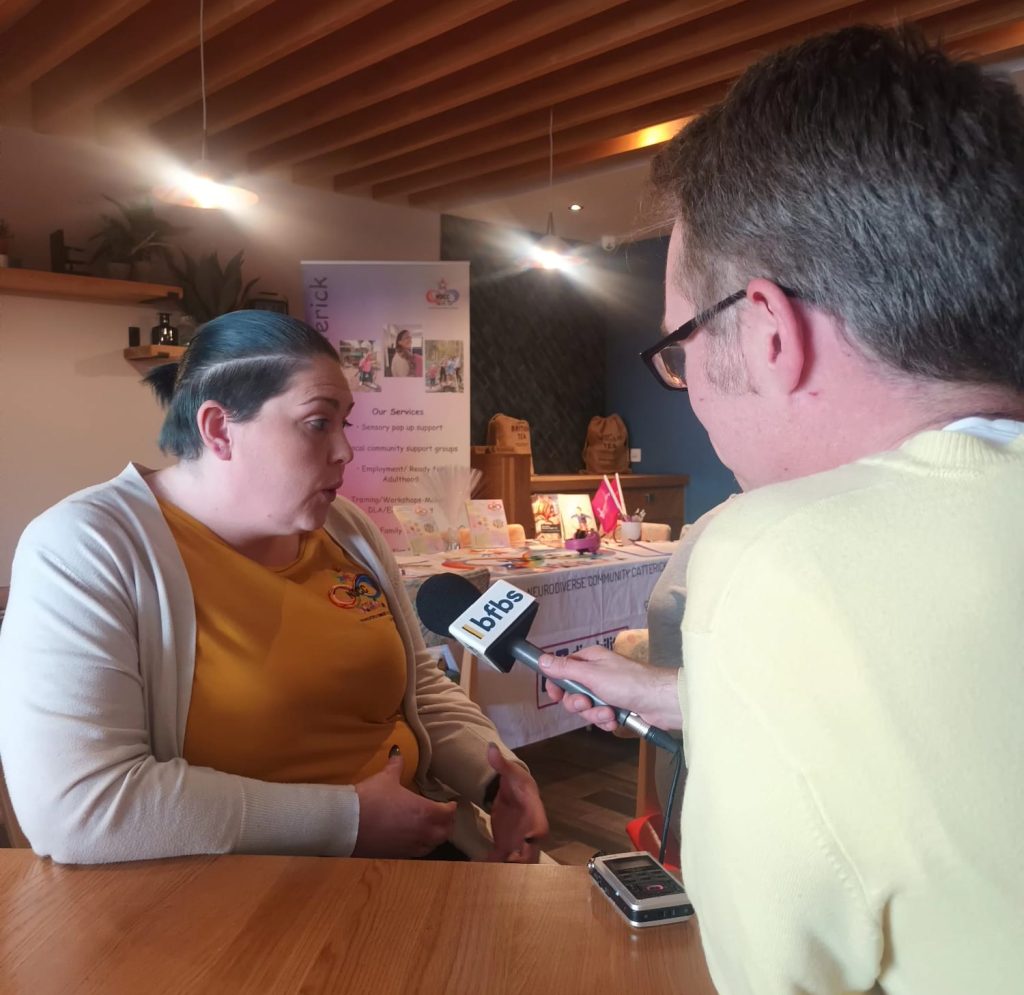
Investing in your family's future.
We actively work hard to ensure parents voices are heard by continuously including parent carer voices in strategic meetings and consultations. We amplify your voice because you deserve to be included.
Safeguarding & Wellbeing
- DBS-checked, trained staff and volunteers
- Sensory-friendly, inclusive environments
- Clear safeguarding policies aligned with national standards
Finding the Right SEND Information
Navigating the SEND system can feel overwhelming, particularly when you are already trying to support a child, young person or family through education, health or care difficulties. Searching online can often add to that pressure, with large amounts of information, complex terminology, changing processes and advice that may not always be clear about what applies to your situation. We have brought together the links below to make things easier. Each section focuses on a specific area of SEND, helping you cut through the information overload, understand your options and find reliable guidance without having to search through countless websites and resources.
Section42.uk is an online tool used by SEND services (and some Local Authorities) to draft legal wording for EHCPs. The timeline calculator is a free tool and helps to show exact dates of the entire 20 week legal process of the EHC Needs Assessment (EHCAR or EHCNA).
The Special Educational Needs and Disability Regulations 2014 set out many of the detailed legal rules that support the SEND framework in England. They explain how duties under the Children and Families Act 2014 must be carried out in practice, including requirements around Education, Health and Care (EHC) needs assessments, EHC plans, reviews, timescales, information that must be provided, and the involvement of children, young people and parents. The Regulations are legally binding and are an important reference point when checking whether the correct SEND processes and procedures have been followed.
IPSEA (Independent Provider of Special Education Advice) provides free, independent information and support to families of children and young people with SEND in England. Its Get Support section brings together accessible guidance on SEND law and children’s educational rights, including EHC needs assessments and EHCPs, annual reviews, SEND Tribunal appeals, school and college support, children who are out of school, disability discrimination, transport and health and social care. It also provides practical resources such as quick guides and template letters, as well as information about accessing IPSEA’s advice services when further support is needed.
Special Needs Jungle (SNJ) is a parent-led website providing information, resources, news and commentary about SEND, disability, health conditions and rare diseases. It helps families understand their rights, navigate education, health and care systems, keep up to date with changes in SEND policy and law, and access practical guidance based on both professional knowledge and lived experience.
SOS!SEN (SOS! Special Educational Needs) is a charity providing independent information, advice and support to parents and carers navigating the SEND system. Its Help Centre covers common issues including EHC needs assessments, EHCPs, annual reviews, appeals and SEND Tribunal, EOTAS, personal budgets, transport and judicial review. SOS!SEN also offers a helpline, email support, advice centres, webinars and one-to-one guidance to help families understand their rights and challenge decisions where necessary.
SEND Advocacy provides information, guidance and advocacy to parents and carers of children and young people with SEND, helping families understand and navigate the SEND system in England. Its Resources section includes practical guides, myth-busting information and links to specialist organisations covering areas such as SEND law, exclusions, EHC plans, transport and appeals. It also offers access to further support, including consultations, learning opportunities and its SEND Advocacy Academy.
Army Carers Network (Army Carers Net) was established to support serving Army personnel who have caring responsibilities, including those caring for family members with SEND, disabilities, mental health needs, acute or chronic illness, or other additional needs. The network provides a community where serving carers can connect with others who understand the challenges of balancing military service with caring responsibilities, access advice and support, and be signposted towards relevant Army, MOD and external services. It also has links with wider Defence networks including the Forces Additional Needs and Disability Forum (FANDF) and CANDID, helping to strengthen awareness and support for carers across Defence.
Armed Forces Health, Disability & Carers Network provides tri-Service support around disability, neurodiversity, SEND, health conditions and caring responsibilities.
Defence Dyslexia Network (DDN) is a lived-experience-led network supporting serving Armed Forces personnel, MOD civil servants and veterans who are dyslexic, think they may be dyslexic, or are neurodivergent. The network works to improve understanding of dyslexia across Defence, challenge misconceptions, share experiences and promote more inclusive working and learning environments. It also helps individuals connect with information, peer support and routes to appropriate workplace or educational support, while advocating for greater awareness and recognition of the strengths that dyslexic and neurodivergent people bring to Defence.