
Financial Support
We understand that financial pressures can place significant stress on individuals and families, particularly when the cost of everyday essentials continues to rise. We also know that asking for help is not always easy.
Complex application processes, eligibility criteria, long waiting times, lack of accessible information, stigma, digital exclusion and simply not knowing where to turn can all create additional barriers at an already difficult time.
At NeuroDiverse Community CIC, we want to make accessing support feel less overwhelming. Through practical guidance, trusted signposting, community partnerships and access to local and specialist services, we aim to help individuals and families understand what financial support may be available to them and take the next steps with greater confidence.
How we can help
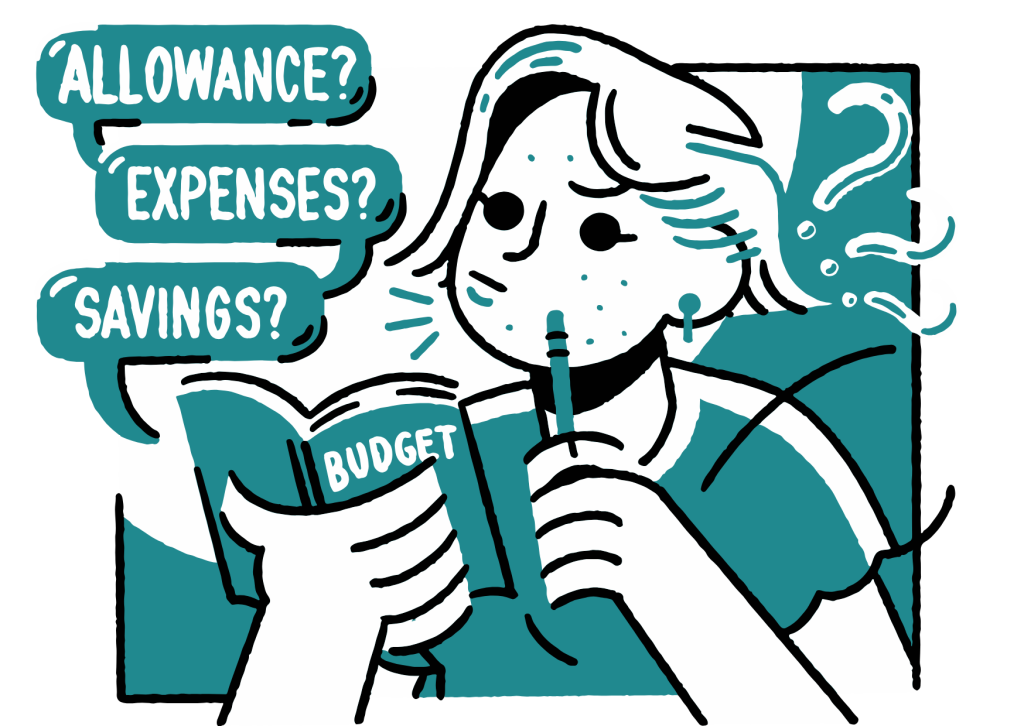
Advice and guidance on:
- Disability Living Allowance (DLA)
- Personal Independent Payment (PIP)
- Universal Credit (UC)
- Carer’s Allowance (CA)
- Service Pupil Premium (SPP)
- Personal Budget for EHCPs
- Travel Allowance for EHCPs
- Disability Discounts
- Military Discounts
Who we work with

Turn2us offers straight-forward information and practical support to anyone struggling financially.
Learn more about specific benefits and other types of support you’re entitled to.

If you have a disability or long term health condition, Purpl helps you cut costs on everyday essentials like groceries, utilities, travel, and tech — all in one place.
Citizens Advice – the people’s champion – give people the knowledge and confidence they need to find their way forward – whoever they are, and whatever their problem.
They help everyone who needs it with practical advice you can really trust.
Their national charity and network of local charities offer confidential advice online, over the phone, and in person, for free.

Defence Discount Service provides those in the Armed Forces, Veterans and the Defence Community with discounts both online and in store.
The Defence Discount Service also allows small and large companies to get involved with offering a discount and encourage companies in local areas to offer discounts to the Armed Forces Community.
Information about various benefits
Disability Living Allowance
Disability Living Allowance (DLA) for children may help with the extra costs of looking after a child who:
- is under 16
- has difficulties walking or needs much more looking after than a child of the same age who does not have a disability
They will need to meet all the eligibility requirements.
The DLA rate is between £30.30 and £194.60 a week and depends on the level of help the child needs.
Personal Independent Payment
Personal Independence Payment (PIP) can help with extra living costs if you have both:
a long-term physical or mental health condition or disability
difficulty doing certain everyday tasks or getting around because of your condition
You can get PIP even if you’re working, have savings or are getting most other benefits.
How PIP works
There are 2 parts to PIP:
- a daily living part – if you need help with everyday tasks
- a mobility part – if you need help with getting around
Whether you get one or both parts and how much you get depends on how difficult you find everyday tasks and getting around.
Daily living part
You might get the daily living part of PIP if you need help with:
- preparing food
- eating and drinking
- managing your medicines or treatments
- washing and bathing
- using the toilet
- dressing and undressing
- reading
- managing your money
- socialising and being around other people
- talking, listening and understanding
Mobility part
You might get the mobility part of PIP if you need help with:
- working out a route and following it
- physically moving around
- leaving your home
You do not have to have a physical disability to get the mobility part. You might also be eligible if you have difficulty getting around because of a cognitive or mental health condition, like anxiety.
How difficulty with tasks is assessed
The Department for Work and Pensions (DWP) will assess how difficult you find daily living and mobility tasks. For each task they’ll look at:
- whether you can do it safely
- how long it takes you
- whether you need help to do it, from a person or using extra equipment
How often your condition affects tasks
To get PIP you must experience difficulty with tasks most of the time. This means that you expect to have difficulty more than half of the days over a 12-month period.
Universal Credit
Universal Credit is a payment to help with your living costs. It’s paid monthly – or twice a month for some people in Scotland.
You may be able to get it if you’re on a low income, out of work or you cannot work.
If you already get other benefits
Universal Credit is replacing Housing Benefit and income-related Employment and Support Allowance (ESA).
If you’re getting these benefits, you do not need to do anything unless either:
- your circumstances change
- you get a letter called a ‘Migration Notice’ telling you that you must claim Universal Credit
You’ll stop getting these benefits when you or your partner claim Universal Credit. If you or your partner gets Pension Credit, this will also stop if one of you claims Universal Credit.
You’ll continue getting any other benefits you already receive, such as Personal Independence Payment (PIP) or Carer’s Allowance.
If you get certain other benefits at the same time as Universal Credit, the amount of Universal Credit you receive will be reduced.
Carer’s Allowance
You could get £86.45 a week if you care for someone at least 35 hours a week and they get certain benefits.
You do not have to be related to, or live with, the person you care for.
You do not get paid extra if you care for more than one person.
If someone else also cares for the same person as you, only one of you can claim Carer’s Allowance.
Carer’s Allowance can affect the other benefits that you and the person you care for get. You have to pay tax on it if your income is over the Personal Allowance.
Service Pupil Premium
The Department for Education (DfE) introduced SPP in April 2011 in recognition of the specific challenges children from service families face, and as part of the commitment to delivering the Armed Forces Covenant.
State schools, academies and free schools in England with children of service families (reception age to year 11) are eligible for SPP funding. SPP helps the school give additional support that the service child may need. It is currently worth £360 per service child for the 2026 to 2027 financial year.
Eligibility criteria
Pupils are eligible for SPP if they meet any of the following criteria:
- one of their parents is serving in the regular armed forces (including pupils with a parent who is on full commitment as part of the full-time reserve service) or is in the armed forces of another nation and is stationed in England and they have been registered as a ‘service child’ in the most recent autumn DfE school census
- they do not currently have ‘service child’ status but they have been registered as a ‘service child’ on any DfE school census in the past 6 years
- one of their parents died while serving in the armed forces and the pupil receives a pension under the Armed Forces Compensation Scheme or the War Pensions Scheme
DfE’s Ever 6 service child measure
The premium was extended so that any pupil in reception to year 11 who has been flagged as a service child in the past 6 years will continue to receive the premium.
Ex-service personnel should tell the school if they left the armed forces within the last 6 years. Under the DfE’s ‘Ever’ measure, schools will continue to receive SPP for up to 6 years for children whose parent left the armed forces, provided the children were recorded as service children in a school census prior to their parent leaving the forces. The Ever measure also applies when service parents divorce or separate or when a service parent dies in service.
Refer to the pre-16 schools funding guidance for more information.
Purpose of the SPP
Eligible schools receive SPP mainly so they can:
- offer pastoral support during challenging times
- help mitigate the negative effects on service children of:
- family mobility
- separation
- parental deployment
Family mobility is when a service person is posted from one location to another, including overseas and within the UK, resulting in separation from their family or moving of the family home.
Separation occurs when a service person is assigned to an unaccompanied location, or the family choose to remain at home when the service person is deployed, resulting in weekly or monthly commutes home, extended periods away, or both.
Parental deployment is when a service person is serving away from home for a period of time, such as a 6- to 9-month tour of duty, or a training course or exercise lasting for a few weeks.
How SPP differs from pupil premium (PP)
SPP helps schools provide mainly pastoral support for service children. The pupil premium (PP) was introduced to raise attainment and accelerate progress within disadvantaged groups.
Schools should not combine SPP with PP funding. The spending of each premium should be accounted for separately, but a school can be allocated both SPP and PP for the same child, if they are eligible for both.
What SPP is used for
For examples of what schools are doing with SPP, refer to Service pupil premium: examples of best practice.
Schools have flexibility over how they use SPP, as they are best placed to understand and respond to the specific needs of their pupils.
The funding could be spent on:
- support, including counselling
- clubs – for example, offering video calls to help improve the means of communication between the child and their deployed parent
- helping children to develop scrapbooks and diaries highlighting their achievements and daily school life
- nurture groups
- after-school activities that support the specific needs of armed forces children – for example, resilience-building out-of-hours childcare for service children that is supported by the wraparound childcare scheme
SPP should not be used to subsidise routine school activity – for example, trips and music lessons. However, schools may choose to fund trips just for service children to help them:
- build a sense of wider community
- understand the role their service parent plays (for example, with military-specific trips)
- cope with the potential strains of armed forces family life
Schools are held to account for the spending of this funding through Ofsted inspections, which focus on the progress and attainment of their wider PP-eligible pupil cohort.
Additional school roles may be required to support the needs of service children when they join a new school, including:
- mobility co-ordinators – for schools with high levels of service pupil mobility
- forces liaison officers
- parent support advisers
Personal Budget for EHCPs
A personal budget is the amount of money estimated to cover the cost of the support specified in a child’s Education, Health and Care Plan (EHCP). It is a notional allocation, meaning it represents the funding available rather than a guaranteed cash sum, and it is only available if the child has an EHCP. The budget is intended to give families more flexibility, choice, and control over the support used to meet the outcomes in the EHCP.
How Can a Personal Budget Be Used?
The personal budget can be spent on services and support that directly meet the outcomes and learning objectives set out in the EHCP. It cannot be used for anything outside the agreed provision. Examples include additional educational support, therapy sessions, or specialist equipment, depending on the child’s needs.
How to Request a Personal Budget
You can request a personal budget from your local authority (LA) when:
- A draft EHCP is issued following an EHC needs assessment or reassessment.
- During an annual review of an existing EHCP.
The LA must consider your request, but it may refuse if the provision is part of a larger contract (e.g., NHS services) that cannot be separated, or if providing the budget would not be an efficient use of resources. If refused, you can ask the LA to review the decision.
Ways to Manage a Personal Budget
There are several ways a personal budget can be delivered:
- Direct Payments: The LA pays money directly to you, allowing you to purchase and manage the services yourself. This gives the most flexibility and control.
- Notional Budgets (Arrangements): The LA or school holds the funds and arranges the provision, but you can influence how the money is spent.
- Third-Party Arrangements: A third-party organisation manages the funds on your behalf and ensures the provision is delivered according to the EHCP.
- Combination: A mix of the above methods can also be used.
Direct Payments
Direct payments are a specific method of managing a personal budget where parents or young people can directly commission services. The payment must be sufficient to cover the cost of the provision specified in the EHCP. The LA can refuse direct payments if it believes the recipient cannot manage the funds appropriately or if it would negatively impact other services
Travel Allowance for EHCPs
For travel allowance under an Education, Health and Care Plan (EHCP), parents may be eligible for Personal Travel Budgets (PTBs), which help cover travel costs to and from school.
Here are some key points:
- PTBs allow families to arrange travel arrangements that work best for their child, including options like shared transport or direct payments for travel.
- Eligibility for PTBs is determined by the local authority based on the child’s needs and the EHCP.
- Families can apply for PTBs online, and the application process may take some time to review.
- The EHCP outlines the specific needs of the child and the support required, which can include travel assistance.
For more detailed information, you can refer to the official guidance from your local authority or the relevant educational service.
Disability Discounts
Disabled people in the UK can access a wide range of discounts, concessions, and financial support, including benefits, travel savings, retail perks, and membership programs.
These include (but are not limited to):
- Access to Work: A government grant scheme that supports disabled people in employment, covering workplace adaptations, specialist equipment, support workers, travel costs, and mental health support
- Disabled Persons Railcard: Offers up to a third off rail fares for PIP or DLA recipients, significantly reducing commuting costs
- Other travel concessions: Many local councils and transport providers offer free or discounted travel for disabled people, including buses and trams
- National Disability Card: Provides access to hundreds of savings on days out, online shopping, and gift cards
- Retailer-specific perks: Stores like Currys, John Lewis, Marks & Spencer, and Boots offer in-store assistance, home delivery, installation services, and loyalty points for disabled customers
- Purpl Membership: For £1 per month, members can access discounts on groceries, utilities, travel, tech, and grants for mobility equipment or assistive technology
- CEA Card:
The UK Cinema Association (UKCA) and its members want to make visiting the cinema an inclusive and enjoyable experience for all. We fully appreciate that some disabled people face barriers at the cinema as a result of the effect of their disability. We are working hard to identify and remove these barriers.
Some disabled people need to be accompanied by someone else to enjoy the cinema experience because of the barriers they experience resulting from the effect of their disability. To make being accompanied as easy as possible the UKCA operates the CEA Card scheme.
The scheme allows a Cardholder to be accompanied by someone, free of charge, when they purchase the applicable full price ticket to visit a participating cinema with that person.
The CEA Card scheme is intended to benefit everyone who might face barriers that require someone’s assistance when visiting the cinema, such as barriers that result from sight or hearing loss, having limited mobility or being neurodivergent. These are just examples – disability and its effects are very wide-ranging. The focus of the CEA Card Scheme is on removing some of the adverse effect of disabilities by providing for someone to accompany a disabled person.
Military Discounts
- Defence Discount Service: Offers discounts on over 14,000 brands, including retailers and restaurants, for members of the Armed Forces, Veterans, and their families. Members can use a Defence Privilege Card for discounts.
- Blue Light Card: Provides exclusive discounts for military personnel and veterans across various sectors, including retail, hospitality, and entertainment. Members can access discounts on over 12,000 brands.
- HM Armed Forces Veteran Card: Verifying your veteran status allows access to special offers and discounts from various organizations.
- Defence Privilege Card: Costs £4.99 and is valid for five years, allowing access to discounts in stores, restaurants, and venues.
For more information, you can visit the official Defence Discount Service website or the Blue Light Card site.